
Comprehensive Eye Exam

If you’ve had a vision screening recently, you might say, “My vision is fine! I don’t need a comprehensive eye exam.”
But a vision screening provides a limited perspective on the overall health of your eyes. It’s a bit like getting your blood pressure checked and not getting the rest of your annual physical. You’ll have useful information, but it’s not the whole picture.
What are the Limitations of a Vision Screening?
Vision screenings only test your ability to see clearly in the distance. This is called visual acuity and is just one factor in your overall vision. Others include color vision, peripheral vision, and depth perception. The screening also doesn’t evaluate how well the eyes focus up close or work together. Most importantly, it doesn’t give any information about the health of the eyes.
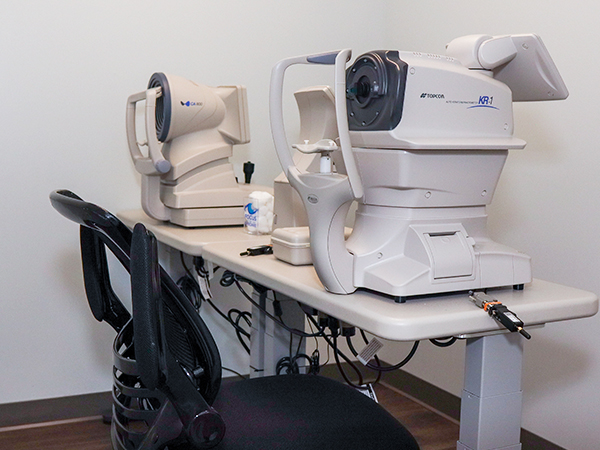
Vision screenings are offered in many places – schools, health fairs, as part of a work physical, or for a driver’s license. In some cases, a vision screening is limited to an eye chart across the room or may include taking a photograph of your eyes. Even when conducted in a physician's office, they won’t have the extensive testing equipment of an eye doctor. They also won’t be aware of nuances such as room lighting and testing distances, all of which are factors that can affect test results. Most individuals don’t have the tools or knowledge to give you a complete assessment of your vision or eye health.
What are the Benefits of a Comprehensive Eye Exam?
Comprehensive eye exams look at your total health history.
Even though you visit a separate office for your eye health, your eyes shouldn’t be treated in isolation. Your eye doctor will discuss your overall health and that of your immediate family, any medications you’re taking, and whether you have high blood pressure or diabetes. They’ll also want to know if you smoke and how much sun exposure you get. All these factors help the eye doctor properly assess your eye health. It is amazing how many systemic diseases have associated findings in your eyes and many medications can have side effects that affect your eyes or vision.

Comprehensive eye exams evaluate all aspects of your vision and eye health.
The comprehensive eye exam looks at your eye externally and internally for any signs of eye disease, then tests your vision in a variety of ways.
External Exam – This is an evaluation of the whites of your eyes, the iris, pupil, eyelids, and eyelashes.
Internal Exam – This is an evaluation of the retina and optic nerve while your eyes are dilated.
Visual Function and Eye Health – This includes testing visual acuity, depth perception, color vision, peripheral vision, and the response of the pupils to light, as well as evaluating eye focusing, eye teaming, and eye movement abilities.
Eye Pressure Testing – This is a test of fluid pressure within your eyes that can be associated with diseases such as uveitis or glaucoma.
Refraction – Your doctor will test your vision with different lenses to determine if glasses or contact lenses can improve your vision
The American Optometric Association recommends an eye exam annually. Your eye doctor may recommend more frequent exams based on your individual needs.
MAP

Contact Info
Hours of Operation
- Monday 8:00am - 4:00pm
- Tuesday 9:00am - 5:00pm
- Wednesday 8:00am - 4:00pm
- Thursday 8:00am - 4:00pm
- Friday 7:00am - 3:00pm
- Saturday Closed
- Sunday Closed
For After-Hours, Emergency, or Urgent Eye Care, Please Call: (412) 308-9111
© 2026 Focus on Eyecare. All rights Reserved. Accessibility Statement - Privacy Policy - Non-Discrimination Policy - Notification of Language Assistance - Sitemap
Powered by:
