
Treating and managing childhood myopia
This article was published in the Allegheny West Magazine in October, 2024
BY MICHELLE L. WERTELET, OD, FAAO FOCUS ON EYECARE
At Focus on Eyecare, we help our patients navigate the challenges of vision care. A common concern among our patients is their children’s vision. Myopia, or nearsightedness, is a condition which causes distance vision to appear blurry while near objects remain clear. It is on the rise globally with a higher percentage of the population becoming myopic and nearsightedness reaching higher levels than in prior generations. However, the good news is that with proper myopia management, we can significantly improve the quality of life for our children and reduce the risk of serious eye health issues later in life
Understanding myopia
Myopia occurs when the eye grows too long from front to back, causing light rays to focus in front of the retina instead of directly on it. This results in blurred distance vision. Genetics play a significant role in the development of myopia. If neither parent has myopia, a child has a one-in-four chance of developing it. If both parents are nearsighted, a child’s risk is one-in-two. Environmental factors, such as increased screen time and insufficient time spent outdoors, also contribute to the onset and progression of myopia.
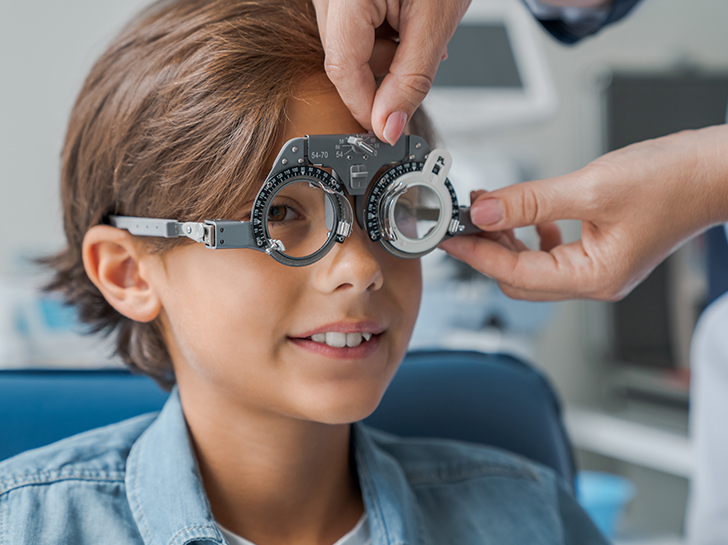
Annual eye exams can help identify myopia early and slow its progression
The importance of early detection and management
Myopia can be managed, but early detection is crucial. Without intervention, myopia can progress rapidly during childhood and adolescence, leading to high myopia. High myopia increases the risk of sightthreatening ocular health conditions, such as retinal detachment, glaucoma and myopic maculopathy. Even a one diopter increase in prescription significantly increases risk. Annual eye exams help identify myopia early, allowing for timely intervention to slow its progression.

Children can reduce their risk of developing myopia simply by taking breaks from their digital devices and spending some time outdoors.
Treatment options for myopia management
Lifestyle modifications
Increased outdoor time - Encouraging children to spend more time outdoors can significantly reduce the risk of myopia and slow its progression. Natural light and the opportunity to focus on distant objects are beneficial for eye health.
Limiting screen time - Reducing prolonged use of digital devices and encouraging breaks during near work can help alleviate strain on the eyes.
Prescription
Glasses and Contact Lenses
Single vision glasses - While traditional glasses allow children to see clearly, they do not slow the progression of myopia.
Disposable soft contact lenses - Multifocal contact lenses create a peripheral defocus which slows down the elongation of the eyeball and progression of myopia. MiSight is a FDA approved daily disposable contact lens for myopia control. Studies have shown that it can reduce the progression of myopia by 59% over a three-year period.
Orthokeratology - The Gentle Vision Shaping System uses specially designed contact lenses worn overnight to temporarily reshape the cornea. This method not only corrects vision during the day without the need for glasses or contact lenses, but it has also been shown to reduce the progression of myopia by 45%.
Pharmacological Treatments
Low dose atropine - Studies have shown that using low dose atropine drops may slow the progression of myopia by 50% to 60%. These drops are usually administered at bedtime and have minimal side effects.
Taking action: a collaborative approach
Effective myopia management requires a collaborative approach involving eye care professionals, parents and children. Regular comprehensive eye exams and follow-up visits are essential to monitor the progression of myopia, measure the axial elongation of the eye and adjust the treatment plans, as necessary. At Focus on Eyecare, our goal is to educate families about the importance of myopia management and provide personalized treatment options for the unique needs of each child.
By addressing myopia early and implementing a comprehensive management plan, we can help children maintain better visual health, reduce the risk of future ocular complications and improve their overall quality of life. Our practice is dedicated to staying informed on all the new research and advances in myopia management and supporting the families in our community to ensure that every child has the best possible start for a lifetime of healthy vision.
If you have concerns about your child’s vision, please don’t hesitate to contact our office at (412) 308-9111 or visit us online at www.focusoneyecare.com. Together we can work toward a clearer, brighter future for your child’s eyesight.
Michelle L. Wertelet, OD, FAAO is a diplomate of the American Board of Optometry and the owner of Focus on Eyecare.
MAP

Contact Info
Hours of Operation
- Monday 8:00am - 4:00pm
- Tuesday 9:00am - 5:00pm
- Wednesday 8:00am - 4:00pm
- Thursday 8:00am - 4:00pm
- Friday 7:00am - 3:00pm
- Saturday Closed
- Sunday Closed
For After-Hours, Emergency, or Urgent Eye Care, Please Call: (412) 308-9111
© 2026 Focus on Eyecare. All rights Reserved. Accessibility Statement - Privacy Policy - Non-Discrimination Policy - Notification of Language Assistance - Sitemap
Powered by:
