
See clearly without glasses or contact lenses
Would you like to be able to see without wearing glasses or contact lenses? If so, there is a non-surgical management option available. Orthokeratology, also known as corneal refractive therapy, is a great way to say goodbye to glasses and daytime contact lenses. With this treatment, you wear molds, a rigid type of contact lens, while you sleep that gently reshapes your cornea so that you can see clearly throughout the day without glasses or contact lenses. Having freedom from glasses and contact lenses is beneficial for people who work in dusty environments or enjoy athletic activities like swimming where contact lenses can become dislodged or are contraindicated. Wearing these molds has the added benefit of slowing myopia progression in children.
What is orthokeratology (ortho-K)?
Orthokeratology is a custom designed rigid gas permeable lens (or mold) that is worn only while sleeping. This mold gently presses on your cornea, reshaping it while you sleep. When you wake up in the morning and remove the mold, you are able to see clearly. This provides you with clear vision throughout the day without glasses or contact lenses. The mold will last all year, unless you lose or mishandle it. The comforting part about this treatment is that it is temporary and reversible, unlike refractive surgery.
How does ortho-K work?
Ortho-K is a great treatment option for people who have myopia (nearsightedness). When you are myopic, the light that enters your eye focuses in front of the retina instead of on it. This makes objects that are far away appear blurry. By wearing an orthokeratology mold, the shape of the cornea is gently changed so that the light focuses directly on the retina, allowing you to see clearly. The cornea is the clear tissue that sits in front of the colored part of your eye. This tissue is not crushed or flattened by the mold. The mold sits on a layer of your tears and causes the fluid within your cornea cells to shift, making some of them thinner and others thicker. The cells hold this new position overnight. When you remove the lens in the morning, the cells very slowly revert to their normal thickness. But this process takes about 18 hours, so you retain clear vision all day long. Unlike refractive surgery, there are no incisions or removal of tissue, which makes the changes completely reversible. Therefore, the mold that you wear every night acts just like a retainer does for your teeth. Once you stop wearing the mold, your corneas and vision return to
Who is a good candidate for orthokeratology?
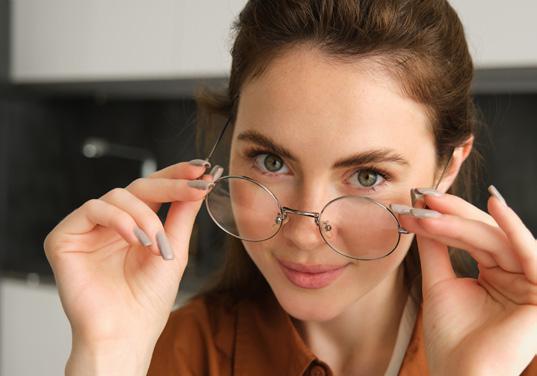
A comprehensive eye examination can determine whether you are a good candidate for orthokeratology. Typically the maximum amount of myopia that can be corrected is up to -6.00 and the maximum amount of astigmatism that can be corrected is up to -1.75. Ideal candidates include:
- Children, teens and adults
- Athletes
- First responders
- Healthcare workers
- People who are nervous about having surgical refractive procedures
- Anyone wanting freedom from glasses and contact lenses

Benefits of orthokeratology
Benefits of orthokeratology include:
- Clear daytime vision
- No daytime contact lenses
- No glasses during sports
- Non-surgical
- Reversible
- May slow myopia progression in children
What is the fitting process like?
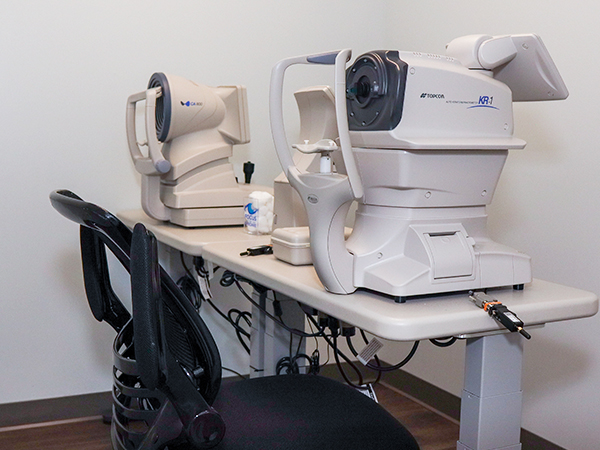
The fitting process of orthokeratology lenses begins with a comprehensive eye examination. The doctor will also perform a corneal topography. This test provides a topographical map of your cornea, similar to a map of hills and valleys. Your lens is then custom designed for the shape of your cornea and your amount of myopia. Once your molds are manufactured, you will have a brief visit to see how the molds are fitting and performing on your eyes. You will also be instructed on how to insert, remove and care for your molds. After that, you will be free to take them home and wear them to bed. The doctor will want to see you the next morning with the molds on your eyes and have you remove them and check how the gentle reshaping of your cornea responded. It is common that your vision is not perfectly clear after wearing molds for the first night, so the doctor will reevaluate your corneal reshaping process again in one week. Typically, the doctor will make adjustments to the molds if they are not performing as expected. If they are performing adequately, the doctor will check you again in one month. By this time, your vision should be fully stabilized. If no adjustments need to be made to the molds, then your fitting process is complete. You may feel the molds in your eyes the most for the first week while your eyes are open prior to falling asleep. Each night you wear the molds, they will become more comfortable. By the end of the first month, most patients’ molds are so comfortable that they almost forget that they are wearing them.
Conclusion
Orthokeratology is a safe, nonsurgical method to correct your vision and give you the convenience of not wearing glasses or contact lenses during the day. It is a great option for both children and adults who have myopia. If you decide that you’d like the freedom from glasses and contact lenses that orthokeratology provides, I have been trained and certified to prescribe this treatment for you. Contact my practice to schedule an appointment and consultation
MAP

Contact Info
Hours of Operation
- Monday 8:00am - 4:00pm
- Tuesday 9:00am - 5:00pm
- Wednesday 8:00am - 4:00pm
- Thursday 8:00am - 4:00pm
- Friday 7:00am - 3:00pm
- Saturday Closed
- Sunday Closed
For After-Hours, Emergency, or Urgent Eye Care, Please Call: (412) 308-9111
© 2026 Focus on Eyecare. All rights Reserved. Accessibility Statement - Privacy Policy - Non-Discrimination Policy - Notification of Language Assistance - Sitemap
Powered by:
